
When transitioning to SAP S/4HANA, organizations typically choose one of three implementation approaches: Greenfield, Brownfield, or Selective Data Transition. In this blog, we’ll take a closer look at the Brownfield approach—what it is, how it works, and the advantages and challenges that come with it.
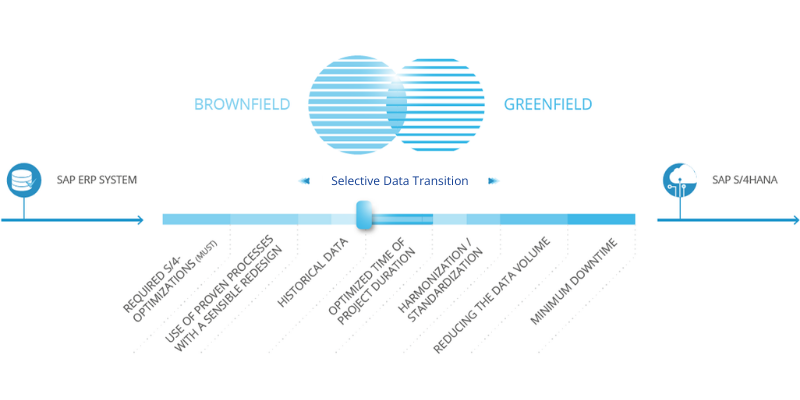
Brownfield Implementation Approach
This approach migrates your existing SAP system directly to S/4HANA, allowing you to modernize your software while preserving the proven processes and value chains already embedded in your current landscape. The entire SAP instance is converted in a single “big bang” event, with all data and custom Z‑programs (SAP add-ons for custom processes) carried forward. Because such a conversion involves transferring large data volumes, it often requires substantial preparation, such as data archiving, harmonization, and other standardization efforts—to ensure a clean and efficient transition.
Pros
- Suitable when technical analysis shows the existing SAP system can be feasibly converted.
- Allows reuse of system connections, addresses, and interfaces that communicate with customer or supplier systems.
- Preserves established processes and value chains, avoiding the need for a full re‑implementation.
Cons
- This approach is not suitable for transitioning to SAP S/4 HANA Public Cloud.
- From a technical point of view, the conversion is limited to customizing, development, master and transaction data, authorizations, and interfaces.
- Requires a “big bang” conversion, which may involve shutting down operations during migration—an impractical scenario for some manufacturers.
Once you’ve identified the right transformation path, the next step is choosing an implementation partner. If you decide to work with ORBIS, we’ll develop a tailored roadmap to ensure a secure and efficient data migration. The journey to S/4HANA can be complex, but we help you navigate each step with confidence and clarity.
In our next blog, we’ll explore the Selective Data Transition approach.