
When transitioning to SAP S/4HANA, organizations typically choose one of three implementation approaches: Greenfield, Brownfield, or Selective Data Transition. In this blog, we’ll take a closer look at the Greenfield approach—what it is, how it works, and the advantages and challenges that come with it.
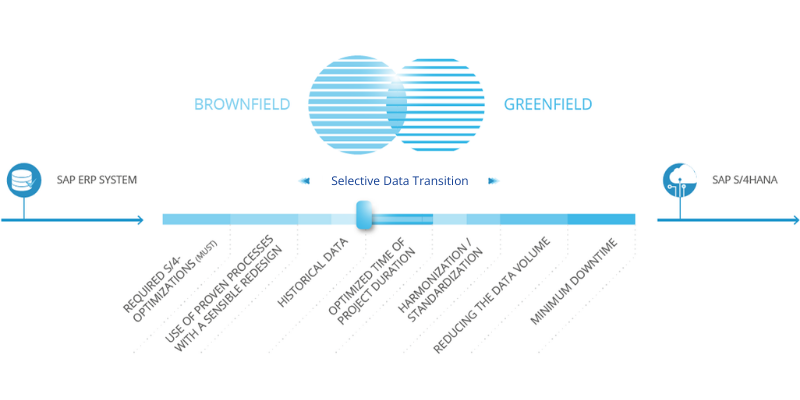
Greenfield Implementation Approach
A Greenfield implementation gives your organization the chance to start fresh. Instead of carrying over existing processes and configurations, you build a brand‑new SAP S/4HANA system from the ground up—aligned with SAP standards and best practices. This clean-slate approach allows you to rethink, simplify, and optimize your business processes while accelerating your digital transformation.
During a Greenfield project, S/4HANA is set up in parallel while your current system is still in operation. New processes are designed, outdated ones are improved or removed, and the system is configured to support your future business needs. When it’s time to go live, all master data such as customer information, materials, and open documents will migrate into the new S/4HANA environment.
Pros
- No legacy constraints. Starting from scratch means you’re not limited by outdated processes or system limitations. You can design workflows that support your business today and scale for the future.
- Flexible deployment. Greenfield implementations can be deployed On‑premise or in the Cloud.
- Ideal for transformation. This approach is well‑suited for organizations looking to reengineer processes, reduce complexity, and adopt modern best practices.
Cons
- Historic legacy data will not be included in the switch to S/4HANA
- Because you’re building everything new, from processes to configurations, the upfront cost is typically higher than other approaches.
Once you’ve identified the right transformation path, the next step is choosing an implementation partner. If you decide to work with ORBIS, we’ll develop a tailored roadmap to ensure a secure and efficient data migration. The journey to S/4HANA can be complex, but we help you navigate each step with confidence and clarity.
In our next blog, we’ll explore the Brownfield implementation approach.