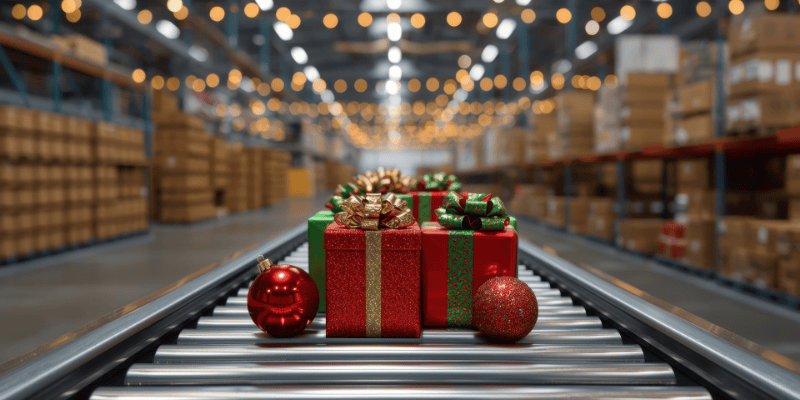
With the holiday season in full swing, people are excited to buy gifts for their loved ones while most retailers are in peak busy season with an increase in sales, both online and in stores. There are no doubts that this rise in demand puts a strain on the manufacturing industry.
Ideally, your supply chain runs smoothly, with no disruptions, so when consumers purchase goods, they receive them on time – especially during the holiday season. That’s why it’s important to have strategies in place to combat any disruption. Empty shelves, delayed holiday gifts, and back orders could result from a disruption in the logistics industry.
Some ideas to take into consideration:
Real-time visibility and traceability across manufacturing supply chain
As a manufacturer, it’s important to have a real-time tracking digital twin of your warehouse shop floor and supply chain. To minimize and quickly adapt to disruptions, tracking and monitoring your raw material deliveries from external vendors, staging and providing the raw materials or other inventory to production, reporting the production in terms of quantity and labor, goods receipt of the finished product into the warehouse and lastly shipping the product to the customer on-time is key.
Predicting consumer demand
Predicting what products will fly off the shelves versus what may be a lighter inventory load is a huge determining factor for manufacturers and what to produce before the holiday season.
Contingency plans
It’s crucial to prepare for worst case scenarios, especially during high demand seasons. For instance, if your carrier gets delayed for any number of reasons, i.e., weather conditions, a driver calls off sick, etc., do you have a plan in place?
Top-tier communication with your vendors
Choosing external vendors that offer full transparency, as well as an open line of communication, is essential. This goes back to having end-to-end visibility of your entire supply chain, so you can trace back to the exact location if something does go wrong.
Use this holiday season as a test drive for the 2026 season. Making note of your inventory, returns, consumer behavior, shipping costs, number of shop workers, machine output/usage, etc. and think about what technologies and plans could help for next year to avoid any disruptions.